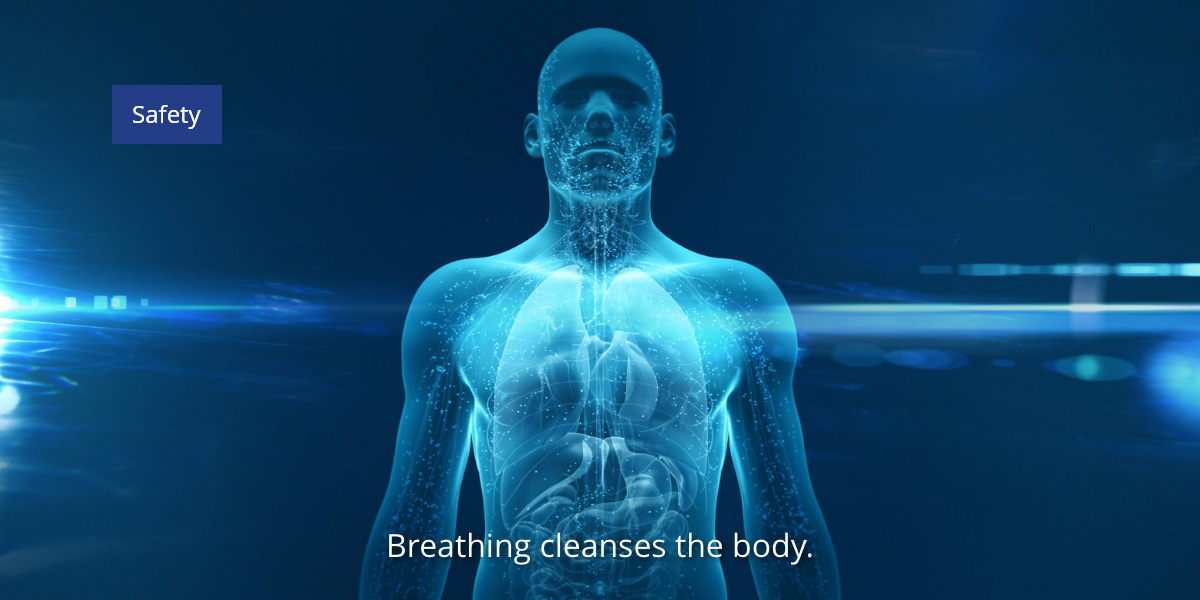
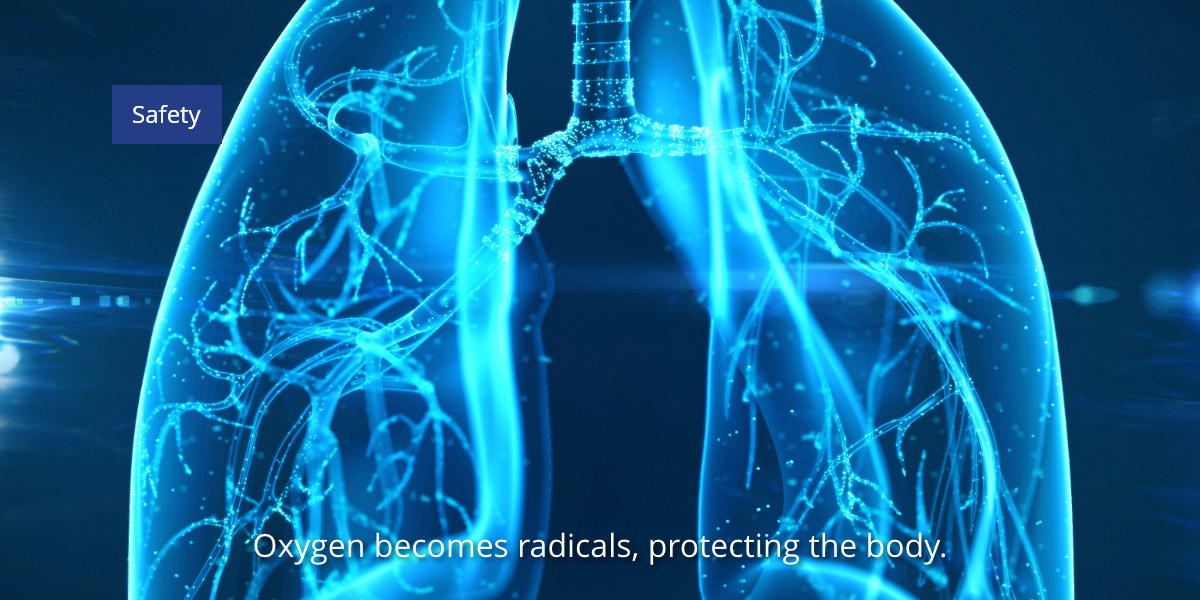
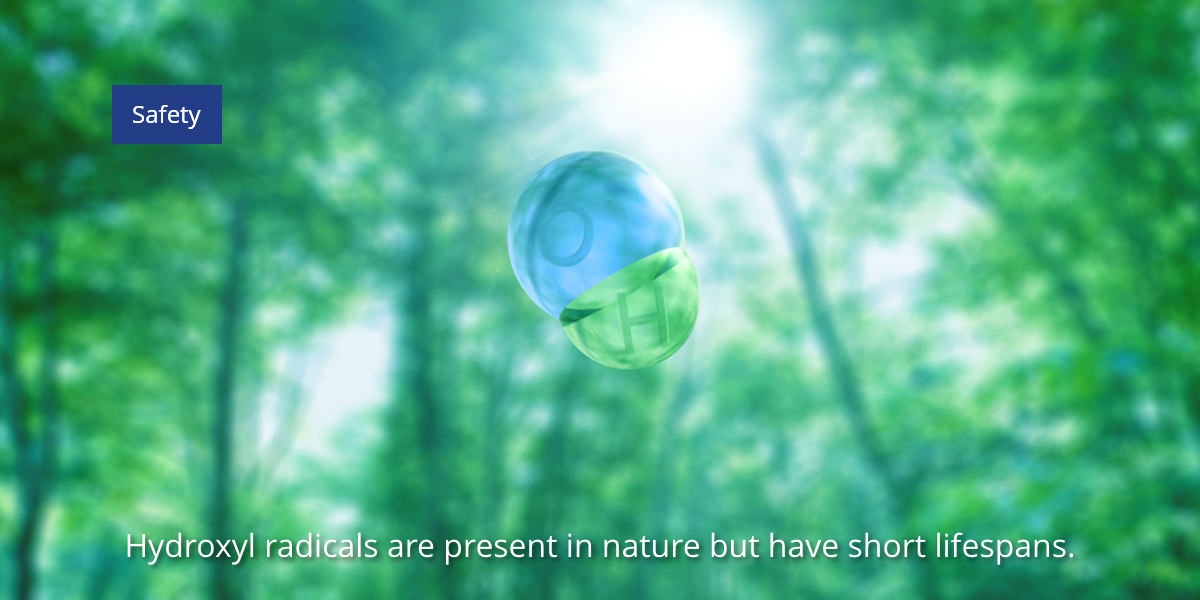
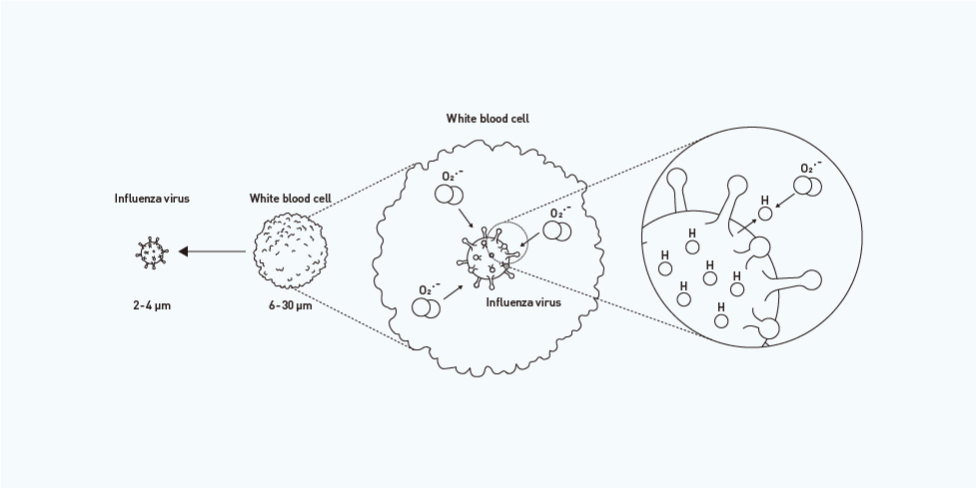
In our bodies, radicals fight germs.
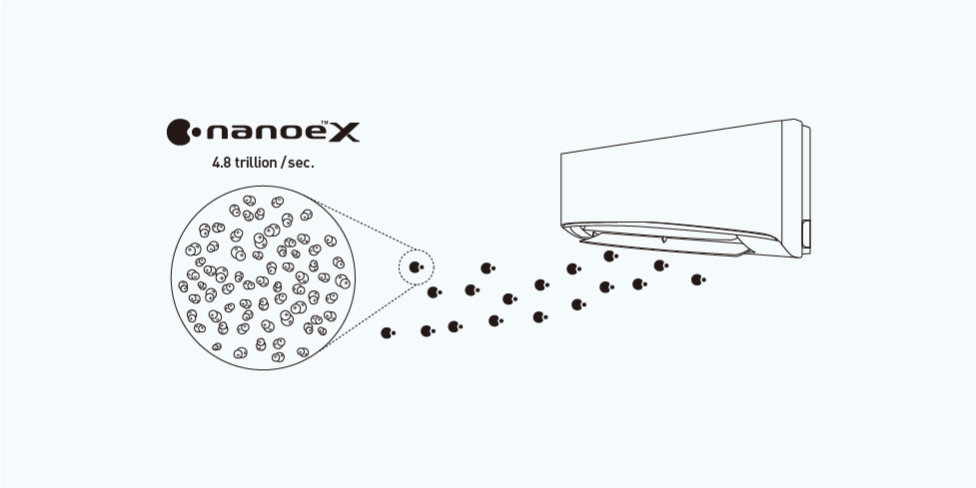
Indoors, nanoe™ X does the same.
The volume of hydroxyl radicals generated by nanoeTM X is 1/500,000th of the volume human beings produce by breathing.
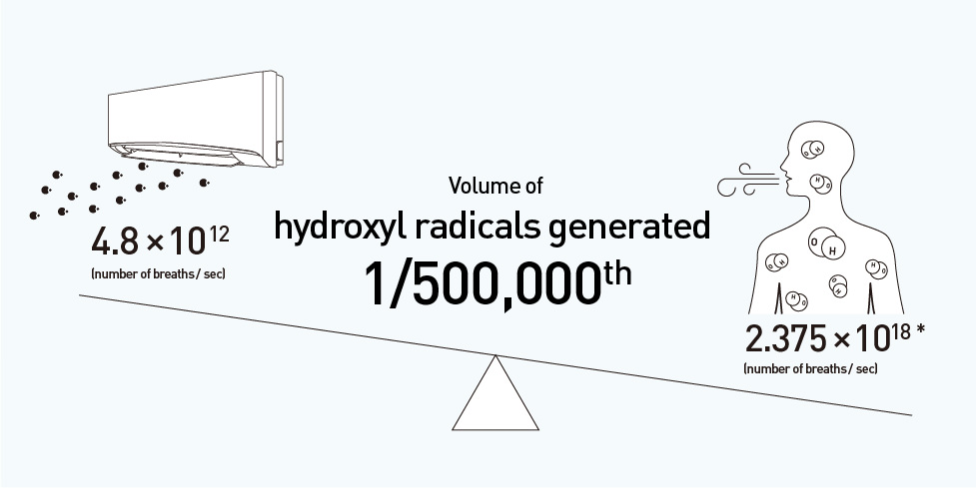
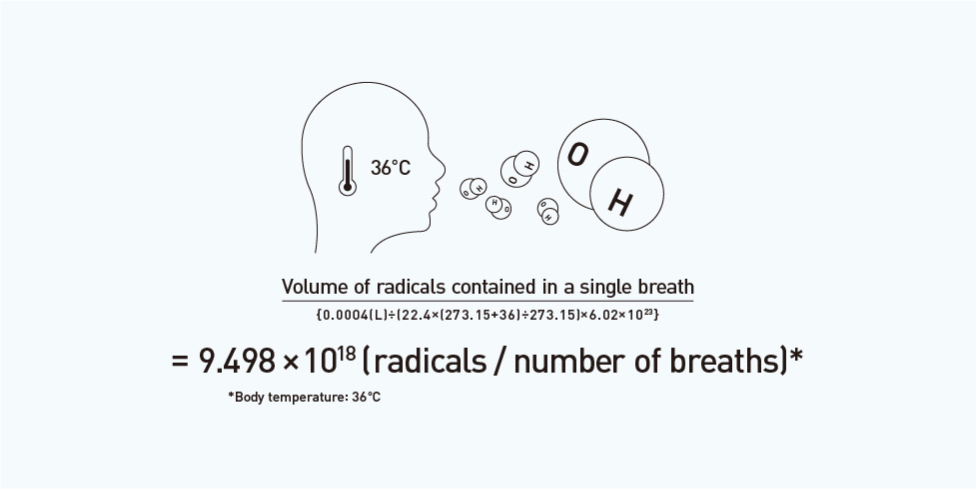
*Since a human being produces 9.498 × 10¹⁸ hydroxyl per breath and breathes 15 times per minute, we generate 1.425 x 10²⁰ hydroxyl radicals per minute, which is 2.375 × 10¹⁸ per second.
nanoeTM X is nanoscale particle ions encapsulated with water. It is safe as it is made from water, nature. The safety tests are verified as below.
| Test Subject | Test name | Testing organisation |
|---|---|---|
| Impact on chromosomes | Chromosome abnormality test using cultured cells | Japan Bioassay Research Center*⁵ (Good Laboratory Practice (GLP)-compliant facility) |
| Impact on respiratory organs | Repeated administration toxicity test | Life Science Research Laboratory*⁶ (Institution registered with the Cause Investigation Institution Network) |
| Toxicological and carcinogenic impact | Chronic toxicity and carcinogenicity combined test | Food and Drug Safety Center, Hatano Research Institute (GLP-compliant facility) |
| Impact on DNA | Comet Assay | Food and Drug Safety Center, Hatano Research Institute (GLP-compliant facility) |
| Impact on male and female fertility and unborn children | Simplified reproductive toxicity test | Food and Drug Safety Center, Hatano Research Institute (GLP-compliant facility) |
Detail of calculation for 1/500,000th of the volume of
hydroxyl radicals generated by nanoe™ X.
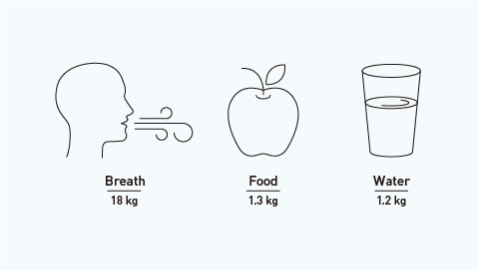
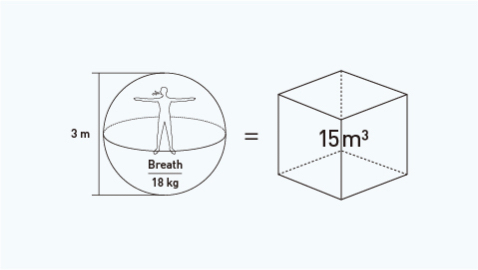
1. Each of us breathes in 18 kg of air a day.
2. That’s about 15 m³, or a sphere 3 meters in diameter.
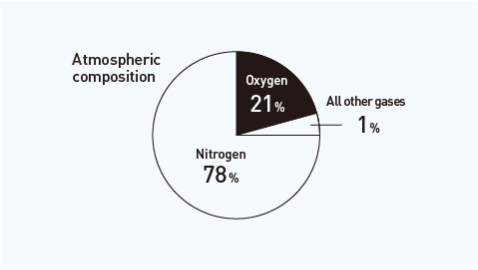
3. We need our air to contain about 21% oxygen.
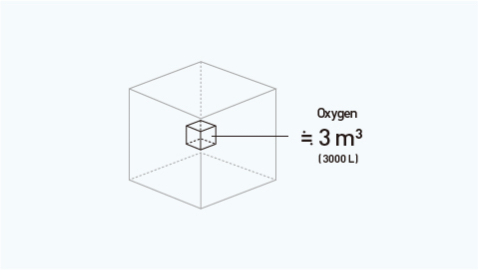
4. That’s about as much as is contained in 3 m³.
5. When this oxygen enters the body, 1–2% is turned into radicals. Hydroxyl radicals are one type of radical.
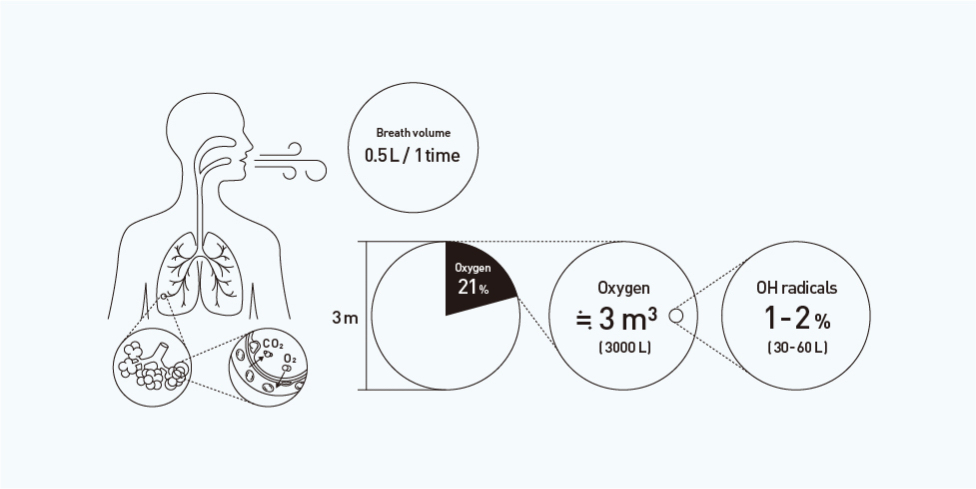
6. Since 2% of the oxygen we breathe turns into radicals, 0.02 L × 0.02 = 0.0004 L, so 0.0004 L of radicals are produced by a single breath.
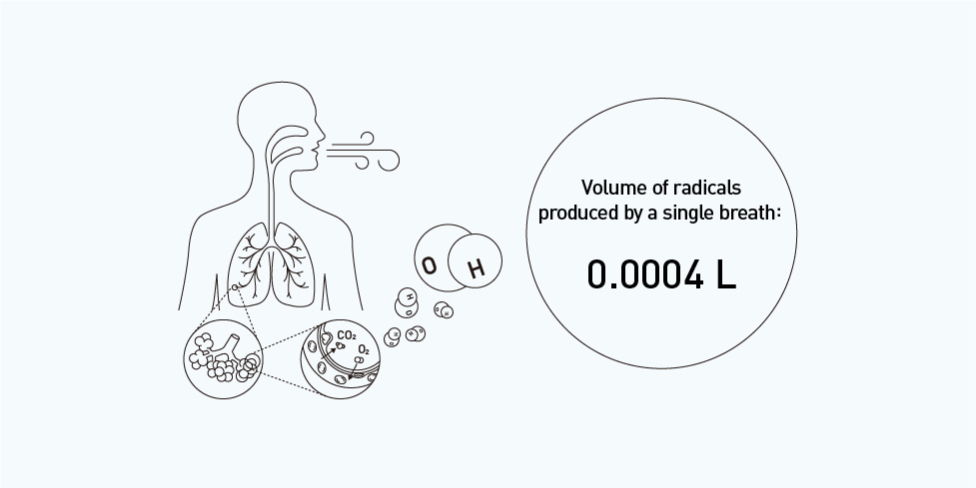
7. At a body temperature of 36˚C, the volume of radicals produced by a single breath is, according to Charles’s law, 0.0004 (L) ÷ (22.4 × (273.15 + 36) ÷ 273.15) × 6.02 × 1023 = 9.498 × 10¹⁸
8. The radicals produced in our bodies fight every day against bacteria that can cause illness.
9. By comparison, the volume of hydroxyl radicals generated by nanoeTM X in continuous operation is about 415 trillion per 24 hours.