





What is House Dust?
House dust is fine particles of dust almost invisible to the naked eye, and you can definitely find it in your home as well.
It may even cause your health to deteriorate without you knowing it. Here is the right knowledge about house dust, and share some appropriate measures you can take against it.

It is Everywhere, Even in Your Home
Even if it looks clean at a glance, house dust is accumulated in many places. Since the particles are extremely small and lightweight, human movements blow them into the air and cause them to move around.

Bedroom
Bedroom is where you can find the most house dust, since human hair, sebum, and lint from the bedding tend to accumulate easily. The warm and humid environment that dust mites favor also contributes to the factors.

In Between Furniture
A lot of dust piles up in between the walls and the furniture which is not moved often, such as the sofa, refrigerator, and cabinet.

Bathroom
Molds form easily in humid and small places. House dust tends to accumulate around bathroom sinks where hair and dandruff are found.

Floor
House dust scatters into the air through human motion and wind, and settle on the floor as time elapses. Therefore, it has a tendency of piling up while people are either away or asleep. Carpets especially need attention, for they trap moisture easily.

Dust Invisible to the Human Eye
House dust includes both dust that comes in from outside and dust that is generated inside the house.
Pollen and sand particles can enter through windows and doors on the wind, or be brought in on our clothes. One of the most common types of dust generated in the house are dust mites that favor bedding and carpets. There also are molds, human dandruff, pet hair, dust mite remains, and dust mite feces. Since they are also food for mites, they need to be cleaned before they accumulate.

It Can Cause Sickness and Allergy
Because house dust particles are extremely small, they easily get blown into the air. When inhaled, they can trigger allergy symptoms.


Ways to Clean House Dust

Clean First Thing in the Morning
Lightweight house dust is blown into the air, and travels along the airflow.
Since it is floating in the air during the day when people are active, cleaning when it is accumulated on the floor is recommended, like first thing in the morning or after you come home.

Clean From Above to Below
If you clean the floor first, the dust from above will fall on the floor as you clean, and you will have to do it twice. Following the right order is recommended for efficient cleaning. Lightly mop the area before vacuuming to reduce the amount of house dust released into the air.

Human eyes cannot see most of the house dust no matter how bright the room is. The house dust sensor detects even such invisible dust of 0.02mm and alerts you of such residues via the indicator lamp.
Suction Power Automatically Increases When the Lamp Flashes!
The red lamp flashes when house dust is detected. Focusing on the areas where the indicator turns red lets you clean efficiently, resulting in longer battery life. The indicator turns blue when the area becomes clean.
*Lamp turns off instead of blue in some models

Dust detected
Cleans thoroughly with high suction power.

No dust detected
The power is saved to prevent wasting energy.

A high-speed infrared sensor in the vacuum cleaner detects even the dust as small as 20μm (0.02mm) that cannot be seen by the human eye.

The House Dust Sensor Prevents Leaving Dust Behind!
Comparison of dust vacuumed with and without house dust sensor

Keeping an eye on the house dust sensor display while cleaning will prevent any leftover particles. When compared to cleaning without a house dust sensor, results showed that 1.7x more fine dust was vacuumed when using the house dust sensor.*2
Fluff (Cotton dust)

Without house dust sensor

With house dust sensor
Fine dust*¹

Without house dust sensor

With house dust sensor
*1 Approx.300μm particles, separated using a sieve.
*2 Internal results, Average figures across two days cleaning activity in tested house(n=36).
Results may vary according to floor surface and use conditions. Tests were carried out using the MC-BJ870 model. “Without house dust sensor” tests were carried out using the BJ870 model without its sensor.

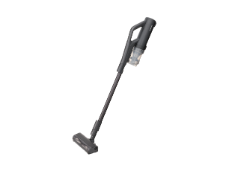
MC-SB85K equipped with a brush head that can even remove 99% or more bacteria*
The new nozzle brush head on SB85K can even remove 99% or more bacteria on the floor.* The secret is its denser bristles and the ion plate.
The negative ions generated from the ion plate pull away the bacteria and dust stuck to the floor by static electricity.
*[Testing Organization] Japan Food Research Laboratories [Test Strain] Staphylococcus aureus [Test Method] One back and forth sweep with the floor nozzle on wood flooring without grooves coated with the bacteria [Test Results] Bacteria elimination effect of 99% or more (our calculated value) [Date of Issue of Test Report] September 15, 2021 [Test Report Number] No. 20139632001-0301.


Recommended Vacuum Cleaners
Related Articles

Say Good-bye to Tangling

How to Keep Your House Clean