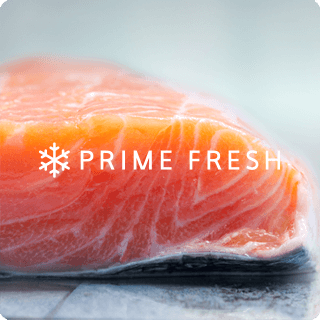
Rapid Freezing Technology That Simplifies Meal Prep
Prime Freeze keeps your meats, vegetables, and fruit fresh for longer while ensuring that flavours, textures, and colours remain unchanged.
5X Faster Freezing With Powerful Airflow
An aluminium plate quickly cools food while Prime Freeze generates a powerful flow of cold air to speed up the freezing process.

Seals In Freshness & Nutrients
Rapid Freezing Mode locks in the mouth-watering, umami (savoury) flavours of meat, ensuring that frozen food tastes delicious even after defrosting.


Preserves Vegetables & Prevents Discolouration
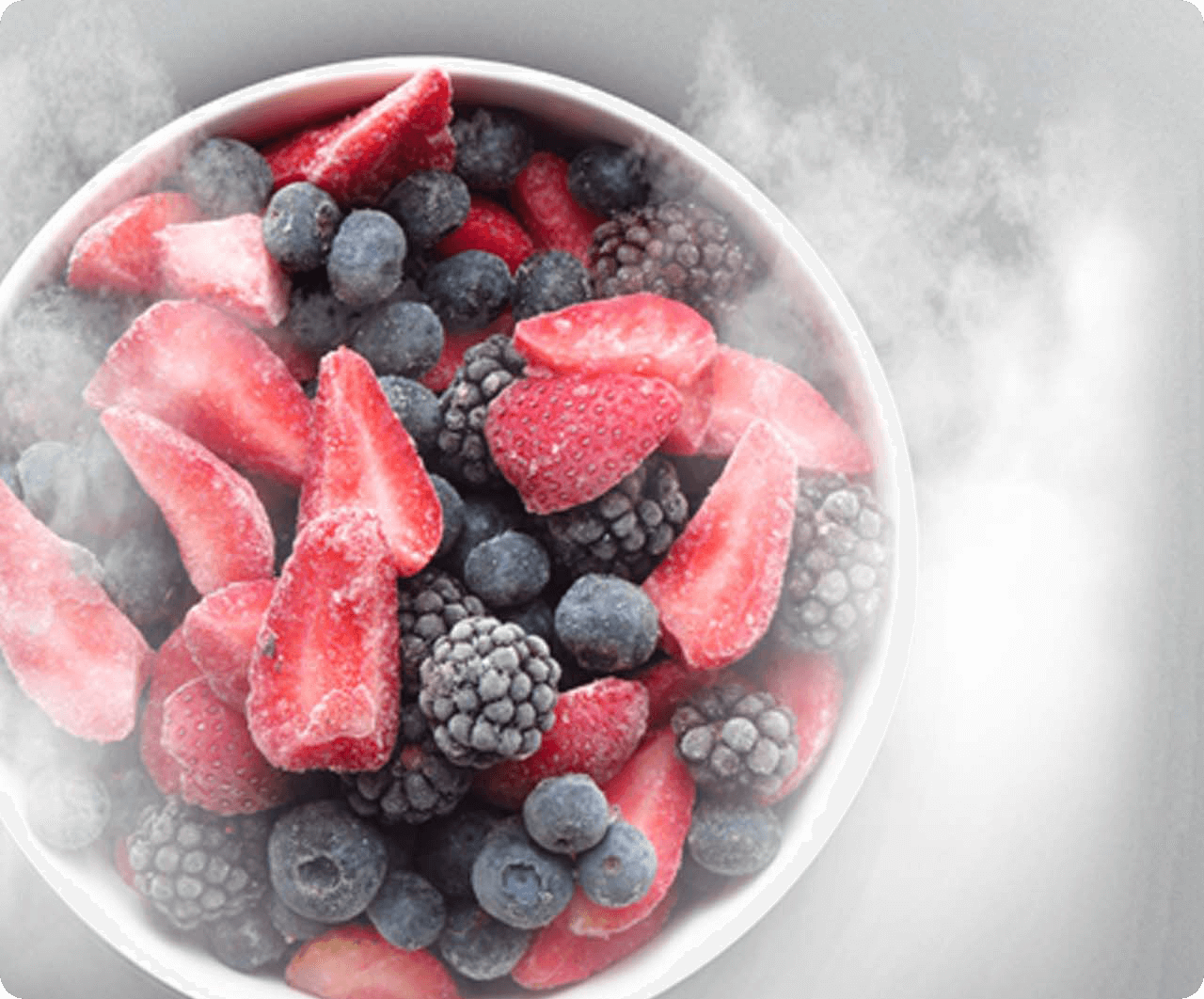
Prime Freeze helps fruit and vegetables stay fresh for longer while preventing unsightly discolouration due to frost formation.

Locks In Flavours & Textures
Prime Freeze’s Rapid Freezing technology prevents cell damage in food caused by ice crystals. This means juiciness is retained even after defrosting with no loss of umami flavours.

*Experimental conditions: Two slices of commercially available bread cut into slices of approx. 25 mm (equivalent to 5 slices) were placed on an aluminium plate in the Prime Freeze drawer, rapidly frozen, and then placed in a storage bag. In the case of standard freezing, the bread was placed in a storage bag and frozen in a freezer. After defrosting, it was stored in a freezer for 2 weeks. The bread was then toasted in a toaster. (Measurements performed in-house.)

Saves cooking time
Quick Cooling Mode reduces the time required to prep food for cooking, such as marinades.


Reduces Time and Worry
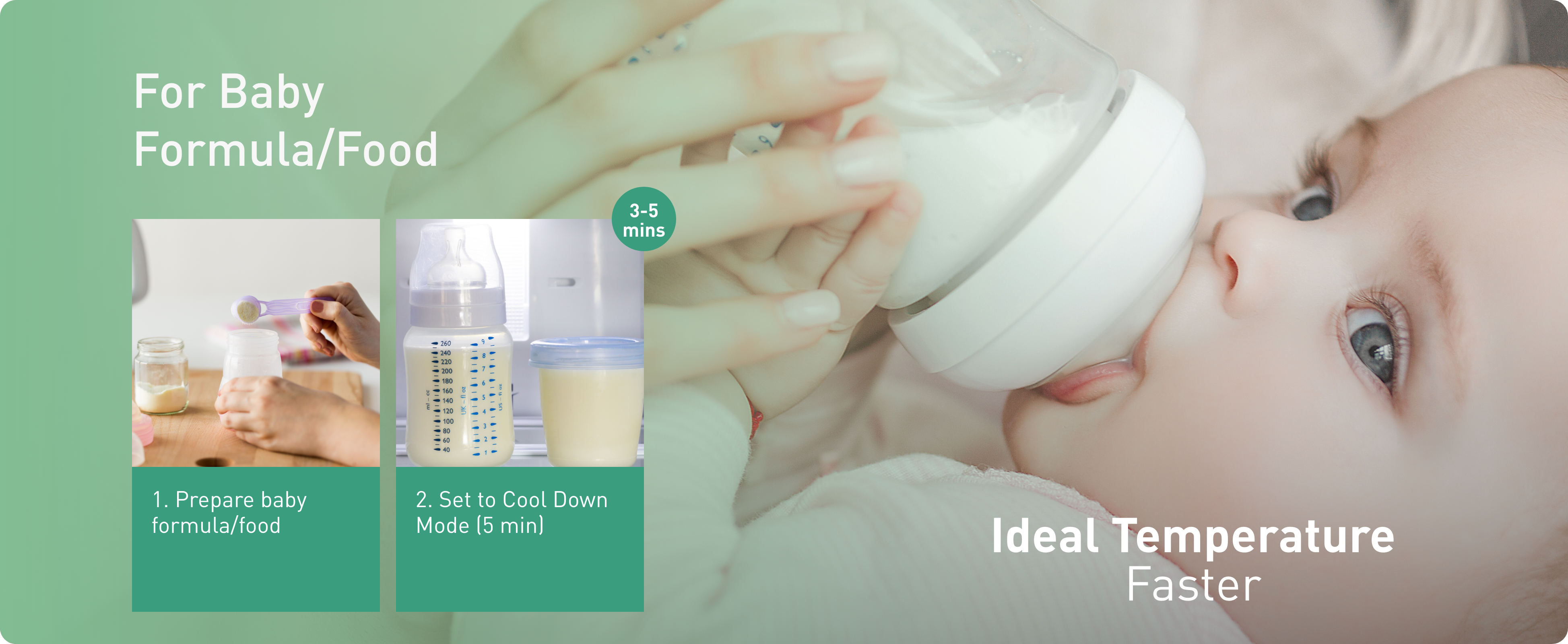
Cools cooked food rapidly, whether a lunch box, baby milk, or soup for children.


Eight Methods To Simplify Your Routine
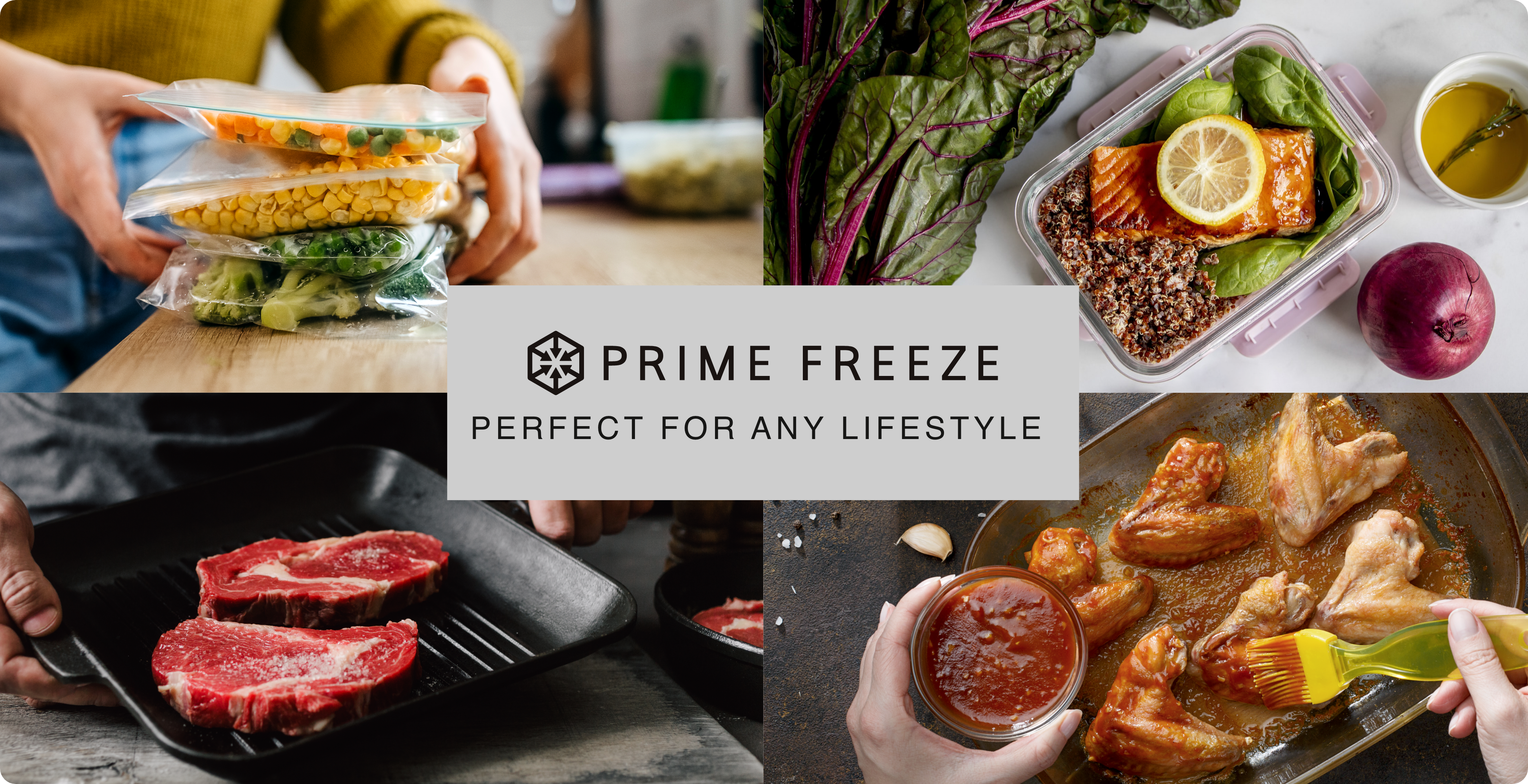
Whether you are cooking for your family, working towards your fitness goals, or even preparing for a gathering with friends, Prime Freeze expands the user experience range and provides fresh inspiration, making it easier to practise healthy eating.
FREQUENTLY ASKED QUESTIONS
General

Q: What types of food require wrapping and which ones can be stored without wrapping?
(1) Rapid Freezing: Raw ingredients, dried foods, preserved foods and other non-heated ingredients and rice need to be wrapped in plastic wrap. Cooked foods (curries, fried foods, tempura, stews, etc.) can be stored without wrapping.
(2) Cool Down: Food can be stored without wrapping.
(3) Quick Cooling: Pudding, jelly, etc. can be stored without wrapping.
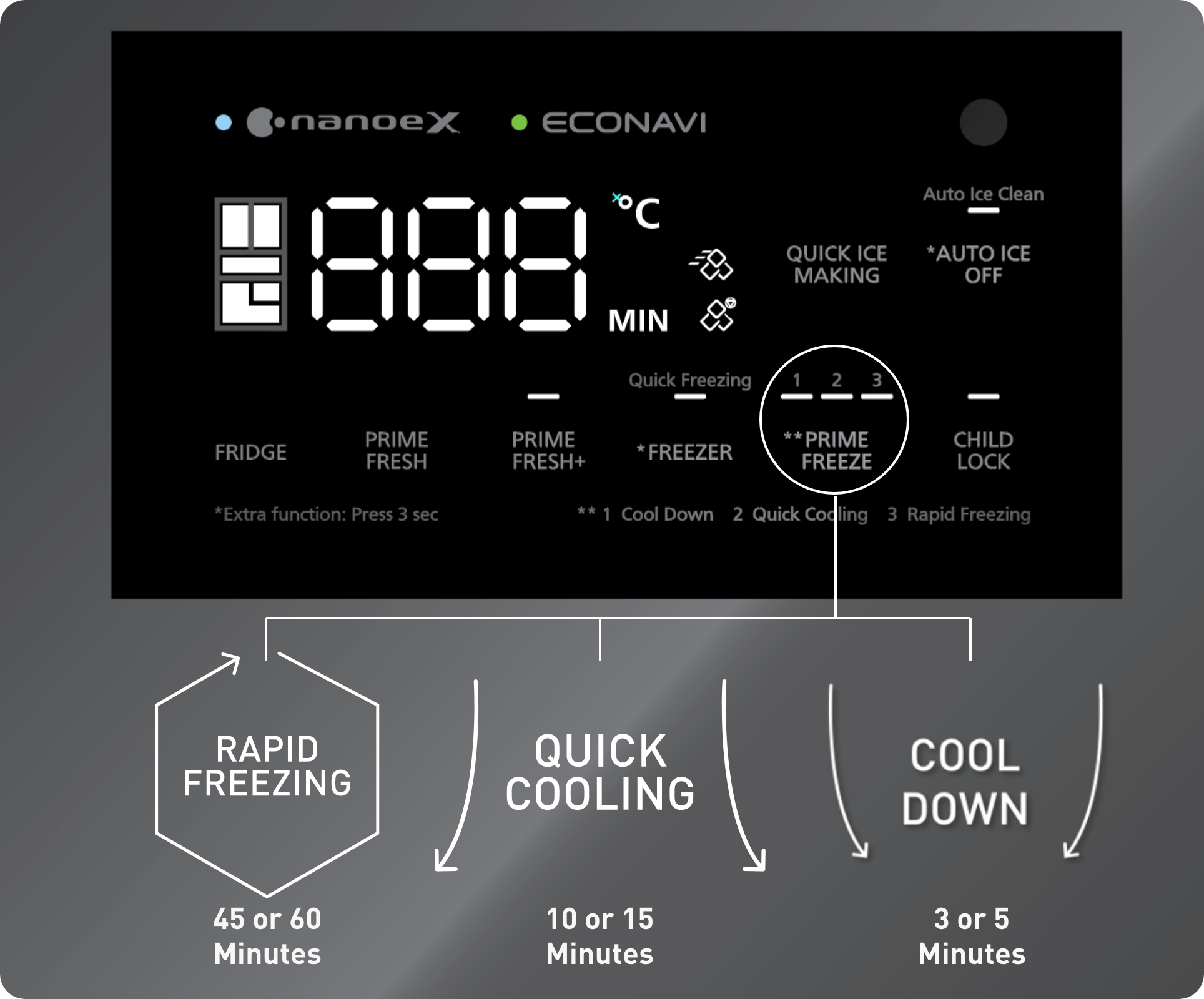
Q: What is the difference between Cool Down, Quick Cooling, and Rapid Freezing?
Rapid Freezing mode and Quick Cooling mode run the dedicated fan constantly for the entire time that is set to provide a consistent airflow. The Cool Down mode turns the fan on and off over five minutes to cool down food. This ensures that the food is cooled evenly and not just on the surface.
Q: Is there an upper limit to the temperature of food that can be stored?
Do not keep warm foods above 70°C inside the Prime Freeze compartment. Avoid putting boiling liquid or soup directly in the refrigerator as it can cause frost build-up or affect the mechanical parts of the product.
Q: Can the Prime Freeze space be used as a storage space?
Yes. The Prime Freeze compartment can be used as a regular freezer when the Rapid Freezing/Quick Cooling/Cool Down modes are not in use.
Q: Must I take out other items inside the compartment when using Prime Freeze features?
No. Simply move items stored in the compartment behind the aluminum tray. Only food placed on the aluminum tray can be quickly chilled or frozen.
Q: What container should I use to store food inside the Prime Freeze compartment?
Storage in a metal tray, freezer pack, or plastic wrap is recommended. A glass container is not recommended.
Any container made from a plastic or ceramic may reduce the efficiency of the Prime Freeze features.
Q: Does Prime Freeze work throughout the entire compartment of the refrigerator?
Place food at the centre (in the circle) of the aluminum tray for the best results. The efficiency of Prime Freeze decreases the farther away the food is from the circle at the centre of the aluminum tray. However, the area outside the circle is still colder than a normal freezer.
Q: What happens if I don’t take out the ingredients after hearing the prompt?
Rapid freezing, Quick cooling or Cool down functions will stop. Since it is in the freezing temperature zone, it will freeze if it continues to be stored.
Q: Can I use the Prime Freeze features anytime? Is there any time I cannot use these features?
The quick ice making, Prime Fresh+, and Quick Freezing functions cannot be used at the same time as the Prime Freeze features.
The defrost function automatically starts if frost builds up inside the condenser. The Prime Freeze features cannot be used and will be on standby while the defrost function is in operation.
Q: How much does power consumption increase when using the Prime Freeze features?
Power consumption will be increased by about 20%. ECONAVI doesn’t work while using Prime Freeze features.
Disclaimer:
* The above information only applies to food with temperatures below 70°C..
Rapid Freezing
Q: How should I store food after using the Rapid Freezing mode?
Move the frozen food to the regular freezer for prolonged storage.
Wrapping the frozen food in plastic wrap or a freezer bag is recommended.
Q: Can I continue keeping the items in the compartment if I forget to take them out after using the Rapid Freezing feature?
Food can be left in the Prime Freeze compartment after using the Rapid Freezing mode.
It is recommended to move the food to the regular freezer the next time you use any Prime Freeze features.
Q: How long is the shelf life of food that has been frozen with Prime Freeze?
Food frozen using the Rapid Freezing mode has the same expiration date as regularly frozen food.
Q: Will it cause “frostbite” when food comes in contact with the cold air?
No. The Rapid Freezing mode does not cause freezer burn.
Freezer burn is caused by the loss of moisture inside food and oxidation of fat caused by prolonged frozen storage. However, storing food in the regular freezer after using the Rapid Freezing mode is recommended because freezing food with Rapid Freezing mode over the set amount of time without plastic wrap may dry out the food.
Q: How should Prime Freeze food be heated? Is there a designated heating method? Can it be defrosted naturally?
Heat the food in the same way you would when regularly frozen food. It is recommended to reheat cooked food such as rice and fried foods in a microwave.
Defrosting food at room temperature is possible but is not recommended from a food hygiene perspective.
Quick Cooling
Q: Can the Quick Cooling feature be used for beverages?
Yes, but it is not recommended for canned beverages or ones in PET/glass bottles as they may burst when frozen.
Cool Down
Q: What is the recommended food storage condition for the Cool Down feature?
In order to allow the cold air to come in direct contact with the food, please remove the container cover, plastic wrap and any other obstructions.
Q: How much does the temperature of hot food decrease in three minutes?
The specific temperature drop varies according to the quantity and temperature of the food. As an example, a 150g lunch box at 60ºC drops below 25ºC in 3 minutes*.
*Test conditions: 150g of rice at temperature of 60℃ in a lunchbox was cooled down without closing the lid. The temperature of the rice reached 25℃ or lower within 3 minutes (in-house measurement).